
Addictology
Understanding the discipline and knowing who to turn to…
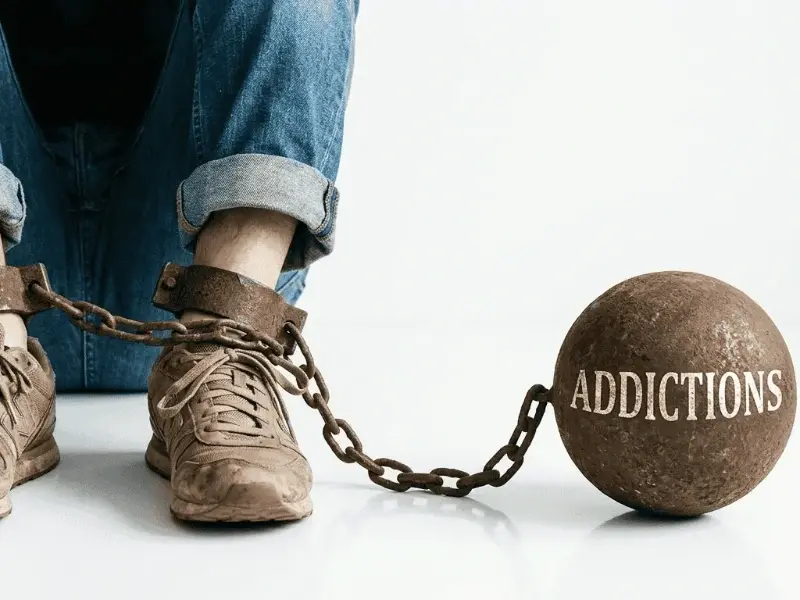
Addictology (addiction medicine) is the discipline that studies, understands and supports addictive behaviours. It covers both substance addictions (alcohol, cannabis, cocaine, medication, tobacco…) and behavioural addictions (gambling, screens, compulsive shopping, sex, sport, work). Its goal is not only stopping a substance or behaviour, but the overall recovery of the person.
When facing a loss of control, repeated relapses, persistent distress or relationship tensions linked to use, consulting an addiction specialist provides structured, personalised, professional support.
What is addictology?
Addictology is a cross-disciplinary approach drawing on psychology, neurobiology, the understanding of behaviour and the person’s life context. It starts from a simple observation: addiction is neither a lack of willpower nor a moral weakness. It is a complex mechanism interweaving:
- biological factors (the reward circuit, physical or psychological dependence)
- psychological factors (emotional regulation, trauma, anxiety, depression)
- relational and environmental factors (stress, isolation, conflict, social pressure)
The value of addictology is therefore to address the problem as a whole, rather than focusing solely on consumption.
Who is the addiction specialist?
An addiction specialist is a professional trained in supporting addictive behaviours. They may be a doctor, psychiatrist, psychologist or qualified therapist.
As far as I am concerned, I am not a medical doctor. This means that:
- I do not prescribe medication
- I do not perform medical procedures
On the other hand, I support the person as a whole on the psychological, behavioural and relational levels. When necessary, I can work in complementarity with a doctor, a psychiatrist or a specialised centre to ensure coordinated care.
My role is to support you through change, not to medicalise you systematically.
Why consult an addiction specialist?
People often seek help too late, when the situation has become critical. Yet addictology can help at different stages:
- loss of control over use
- increasing quantities or frequency
- unsuccessful attempts to stop
- repeated relapses
- financial repercussions linked to use
- negative impact on work
- family or marital conflict linked to the addiction
- feelings of shame, guilt or isolation
- a need to understand how you function
Seeking help means stepping out of a lonely face-off with addiction and entering a structured, supportive framework.
My approach to addiction support
My support is based on an individualised, collaborative approach. This means we work together, taking your capabilities into account.
In particular, I use:
- motivational interviewing to clarify your ambivalence about change
- tools from cognitive-behavioural therapy to identify triggers and change certain automatic behaviours
- harm-reduction work, referring where appropriate to institutional organisations (in France: CAARUD, CSAPA…)
- work on emotions and relational patterns
- strengthening psychosocial skills (assertiveness, stress management, emotional regulation)
The goal is not only stopping, but building a lasting balance.
Addiction: complete stop or reduction?
Every journey is different. Some people aim for complete abstinence, others for controlled reduction. My role is not to impose a model, but to help you define realistic goals consistent with your situation.
Recovery may include:
- understanding the role addiction plays in your life
- learning to manage cravings
- rebuilding self-esteem
- repairing weakened relationships
- regaining a sense of control and freedom
Addictology and holistic care
Addiction is not only about a substance or a behaviour. It affects:
- mental health
- working life
- the couple’s relationship
- family dynamics
- self-image
That is why, where relevant, I also offer support for couples or families. The aim is to restore communication, clarify roles and reduce the tensions linked to dependence.
Why book an appointment?
Many people wait for « the turning point ». In reality, change often begins with a simple decision: asking for help.
Booking an appointment does not mean committing to turning everything upside down immediately. It means:
- taking initial stock of your situation
- understanding what is really at play
- identifying concrete avenues for change
- breaking out of isolation
I offer a first conversation by remote consultation to assess your situation and determine together the best way to support you.
You are not your addiction…
Addiction is a process. Recovery is another. My role as an addiction specialist is to offer you a safe, professional and caring framework to help you become the driver of your own path again.
If you recognise yourself in these lines, there is no need to wait for the situation to get worse. The first step towards change often begins with simply getting in touch.
You are not alone. Let's take the first step together.
Fabrice Plantier supports you with care and without judgement, towards lasting change. A first appointment is all it takes to begin.